
Interviu/Interview – Prof.univ.Dr. Dumitru Constantin Dulcan

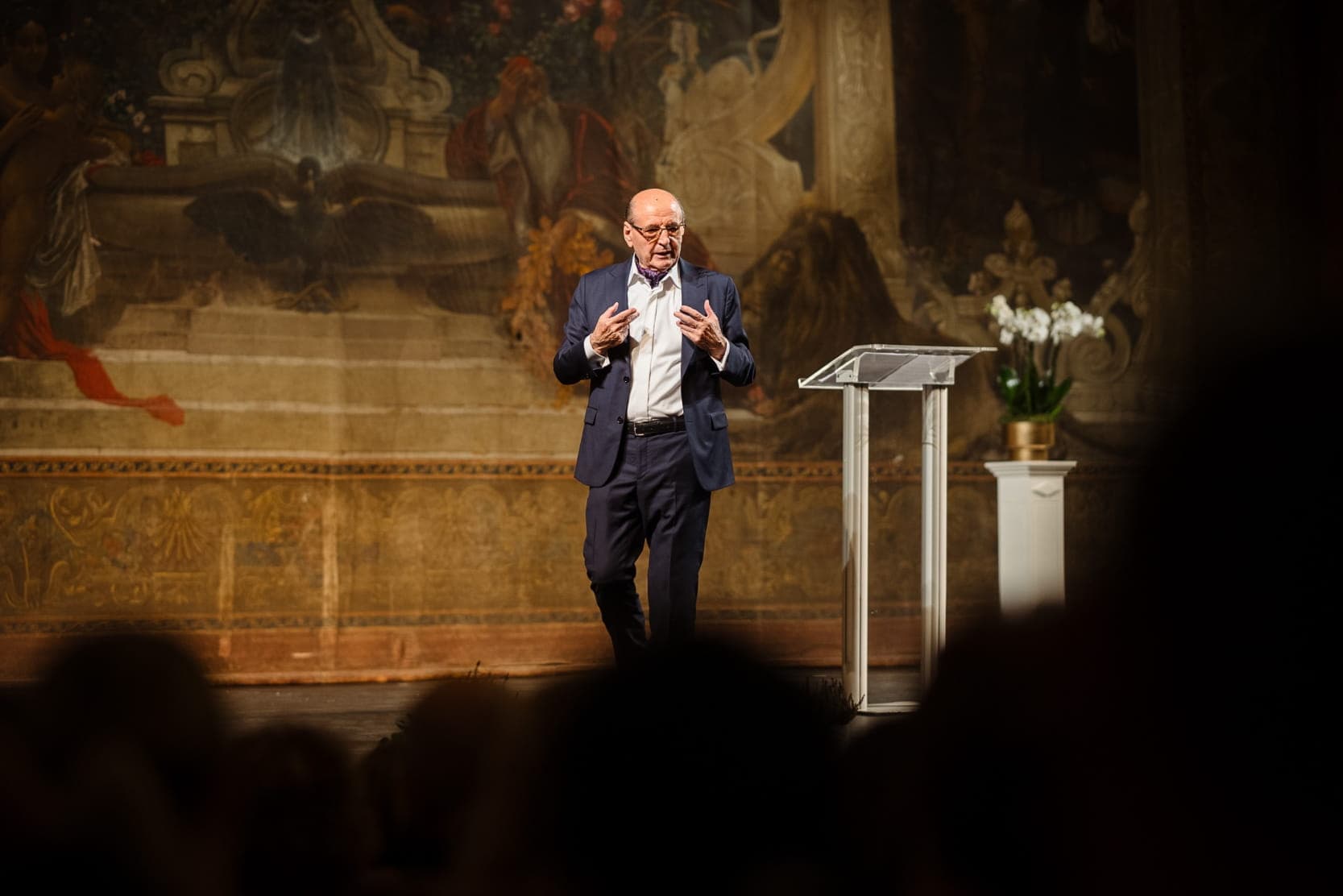
Avem deosebita plăcere să discut cu un medic remarcabil, domnul Prof. Univ. Dr. Dumitru Constantin Dulcan și vă invit să-i descoperiți povestea de viață în interviul următor.
We have the great pleasure of talking with a remarkable doctor, Prof. Univ. Dr. Dumitru Constantin Dulcan, and I invite you to discover his life story in the following interview.
Drd. Maria Diana Focşa: Domnule Prof. Univ. Dr. Dumitru Constantin Dulcan, dacă ar fi să vă faceţi o prezentare succintă, ce aţi dori să ştie cititorii noştri despre dumneavoastră?
Prof. Dr. Dumitru Constantin Dulcan, if you were to give a brief introduction, what would you like our readers to know about you?
Prof. Univ. Dr. Dumitru Constantin Dulcan: Sunt un gânditor clasic, surprins de timpurile moderne, legitimat prin cărțile pe care le-am scris și conferințele pe care le-am ținut în țară și în străinătate.
Am înființat prima clinică de Neurologie în Spitalul Universitar de Urgență Militar Central „Dr. Carol Davila”. Provocat de gândirea științifică și, mai ales, de ideologia timpului meu, care explica întreaga existență a lumii prin intervenția unei simple întâmplări, am simțit nevoia să exprim propriile opinii, nefiind de acord că Hazardul era zeul atotputernic, responsabil de evoluția Universului și de apariția vieții. În înțelegerea mea, această concepție era contrazisă de conexiunile logice stabilite între elementele structurale și funcționale ale lumii vii și nevii. Determinant pentru titlul de „Inteligența Materiei” a fost constatarea că există o inteligență, o logică prezentă în toate formele de manifestare ale lumii, de la cele monocelulare până la geneza și existența astrelor. Am numit această inteligență ca fiind organizatoare și coordonatoare de Univers – idee care detrona hazardul, cel puțin ca rol primordial în existența Universului. Este ușor de înțeles ce ecou, aș spune fulminant, a avut apariția cărții în 1981. Iritarea a fost maximă îndeosebi la „pontifii” ideologiei, dar prin faptul că am supraviețuit la toată agitația stârnită în jurul meu, mi-am spus că există un Dumnezeu. Ascensiunea universitară nu o datorez însă scrierilor mele eseistice. Profesional, mi-am dedicat studiile activității electrice a creierului, atestate prin volumele de Electroencefalografie publicate și prin cursurile în domeniu. M-au atras, de asemenea, studiile dedicate bolii epileptice și îndeosebi conștiinței. În prezent sunt fascinat de complexitatea funcțională pe care o constat la nivelul subconștientului – pe care îl concep ca pe un deținător al unei inteligențe infinite, coexistentă Universului. Aș putea spune într-o formulare sintetizatoare: Conștiința propune, dar Subconștientul dispune.
I am a classical thinker, surprised by modern times, legitimized by the books I have written and the conferences I have held in the country and abroad. I established the first Neurology clinic in the Central Military Emergency University Hospital "Dr. Carol Davila". Challenged by scientific thinking and, especially, by the ideology of my time, which explained the entire existence of the world through the intervention of a simple coincidence, I felt the need to express my own opinions, not agreeing that Hazard was the almighty god, responsible for the evolution of the Universe and the emergence of life. In my understanding, this conception was contradicted by the logical connections established between the structural and functional elements of the living and non-living world. The determining factor for the title "Intelligence of Matter" was the finding that there is an intelligence, a logic present in all forms of manifestation of the world, from single-celled ones to the genesis and existence of the stars. I called this intelligence the organizer and coordinator of the Universe – an idea that dethroned chance, at least as a primary role in the existence of the Universe. It is easy to understand what an echo, I would say fulminating, the appearance of the book had in 1981. The irritation was maximum especially among the “pontiffs” of ideology, but by the fact that I survived all the agitation stirred up around me, I told myself that there is a God. However, I do not owe my academic ascension to my essay writings. Professionally, I dedicated myself to studies of the electrical activity of the brain, attested by the volumes of Electroencephalography published and by courses in the field. I was also attracted by studies dedicated to epileptic disease and especially consciousness. Currently, I am fascinated by the functional complexity that I observe at the level of the subconscious – which I conceive of as a holder of an infinite intelligence, coexisting with the Universe. I could say in a synthesizing formulation: Consciousness proposes, but the Subconscious disposes.

Drd. M.D.F.: Puteți numi câteva persoane care au avut o influență semnificativă în cariera dumneavoastră? Ce ați învățat de la acestea?
Can you name a few people who have had a significant influence on your career? What have you learned from them?
Prof. Univ. Dr. D.C.D.: Da, și aici a intervenit Destinul. Pe primul mentor l-am avut în gimnaziu, profesorul de limba română, Constantin Constantinescu. Eu cred că a fost singurul om, poate, genial pe care l-a avut localitatea mea natală. Era foarte sobru, nu l-am văzut niciodată zâmbind și avea o cultură generală uimitoare. Lecțiile lui erau adevărate dizertații, iar frazele rostite erau sintagme de înțelepciune. În ciuda vârstei, aveam pe atunci 12 ani, am sesizat că dascălul meu este construit din alt aluat decât noi, ceilalți. Mi-am trăit anii de adolescență cu o intensă participare afectivă. Am avut atunci șansa de a fi supravegheat și informat de toate riscurile acestei vârste de către un alt mentor, profesorul Dumitru Gogoț. Mi-a fost, aș putea spune, ca un adevărat părinte. Un alt model, care mi-a marcat anii de maturitate, a fost profesorul Vlad Voiculescu. L-am descris în cartea Somnul Rațiunii (2001). Avea un stil de a preda, de a discuta, care lăsa impresia unei mari modestii, deși dispunea de o aleasă cultură profesională și generală. Ce am învățat de la maeștrii mei? Modestia și profesionalismul care îți oferă prestigiul între semeni.
Yes, and here Destiny intervened. My first mentor was in high school, the Romanian language teacher, Constantin Constantinescu. I think he was the only man, perhaps, brilliant that my hometown had. He was very sober, I never saw him smile and he had an amazing general culture. His lessons were real dissertations, and the phrases he spoke were phrases of wisdom. Despite my age, I was 12 years old at the time, I noticed that my teacher was made of a different dough than the rest of us. I lived my teenage years with intense affective participation. I then had the chance to be supervised and informed of all the risks of this age by another mentor, Professor Dumitru Gogoț. He was, I could say, like a true father to me. Another role model, who marked my mature years, was Professor Vlad Voiculescu. I described him in the book The Sleep of Reason (2001). He had a style of teaching and discussion that left the impression of great modesty, although he had a distinguished professional and general culture. What did I learn from my masters? Modesty and professionalism that give you prestige among your peers.
Drd. M.D.F.: Sunteți un medic de succes! Ce înseamnă medicina pentru dumneavoastră și de unde pasiunea pentru medicină?
You are a successful doctor! What does medicine mean to you and where does your passion for medicine come from?
Prof. Univ. Dr. D.C.D.: În fața diversității de aspecte ale existenței, mi-am pus întrebări menite să îmi aducă răspunsuri. Dintre toate, medicina, prin care ni se dezvăluie misterul anatomiei și al fiziologiei noastre, al posibilităților de intervenție în recuperarea sănătății, îmi spuneam că nu poate fi cunoscută în profunzimea sa decât dacă este studiată ca profesie. Mi-am spus, în același timp, că un medic are nevoie și de o cultură generală nu numai ca interes personal, dar și pentru prestigiul său în întâlnirea cu pacienții de profesii și niveluri culturale diferite. Am mai fost animat de un motiv. Aveam certitudinea că în structura unei ființe umane sunt investite o rațiune și o inteligență cosmică. Nu este apreciat creierul uman ca fiind cea mai complexă structură din univers? Ni se spune că omul și Universul se supun celor patru legi fundamentale – gravitația, forța electromagnetică, forțele slabe și tari din nucleul atomic. „Istoria omului și a Universului par să fie scrise de aceeași mână”, spunea Stanislav Grof (SUA).
Faced with the diversity of aspects of existence, I asked myself questions designed to bring me answers. Of all, medicine, through which the mystery of our anatomy and physiology is revealed to us, of the possibilities of intervention in the recovery of health, I told myself that it could not be known in its depth unless it was studied as a profession. I told myself, at the same time, that a doctor also needs a general culture not only as a personal interest, but also for his prestige in meeting patients of different professions and cultural levels. I was also animated by a reason. I was certain that a reason and a cosmic intelligence are invested in the structure of a human being. Isn't the human brain considered the most complex structure in the universe? We are told that man and the Universe obey the four fundamental laws – gravity, the electromagnetic force, the weak and strong forces in the atomic nucleus. "The history of man and the Universe seem to be written by the same hand," said Stanislav Grof (USA).

Drd. M.D.F.: Cum vedeți acum medicina?
How do you see medicine now?
Prof. Univ. Dr. D.C.D.: La vremea când am fost student (1956-1962), se spunea că medicina a rămas mult în urma nivelului de evoluție a tehnologiei, dar la ora actuală medicina a evoluat enorm. Diferența dintre posibilitățile medicinei de la noi și ale medicinei din Occident nu este de nivel științific, ci poate de dotare tehnologică. Medicii noștri care lucrează în Occident sunt foarte apreciați, dovadă fiind solicitările în acest sens.
When I was a student (1956-1962), it was said that medicine lagged far behind the level of technological evolution, but today medicine has evolved enormously. The difference between the possibilities of medicine here and that of medicine in the West is not in scientific level, but perhaps in technological equipment. Our doctors working in the West are highly appreciated, as evidenced by the requests in this regard.
Drd. M.D.F.: Ce sfaturi aveți pentru cei care doresc să devină medici?
What advice do you have for those who want to become doctors?
Prof. Univ. Dr. D.C.D.: Profesia de medic este încă una de sacrificiu. Pregătirea continuă, nevoia de a răspunde în orice moment urgențelor, gărzile epuizante și responsabilitatea în fața fiecărui caz sunt obligații care fac parte din viața unui medic. Profesia medicală presupune în același timp o devoțiune pentru pacient și o acceptare a tuturor condițiilor pe care le implică boala. Cred că nu oricine poate îndeplini aceste servituți. A fi medic presupune a avea o structură psihologică aparte. Un sfat: înainte de a opta pentru studiul medicinei, cunoașteți-vă bine pe voi înșivă.
The medical profession is still one of sacrifice. Continuous training, the need to respond to emergencies at any time, exhausting shifts and responsibility for each case are obligations that are part of a doctor's life.
The medical profession implies at the same time a devotion to the patient and an acceptance of all the conditions that the disease implies. I believe that not everyone can fulfill these servitudes. Being a doctor implies having a special psychological structure. A piece of advice: before opting for the study of medicine, know yourself well.
Drd. M.D.F.: Din experienţa vastă pe care o aveţi, există un caz care v-a emoționat?
From your vast experience, is there a case that moved you?
Prof. Univ. Dr. D.C.D.: Toate cazurile implică și o trăire emoțională, dar cea mai mare emoție este aceea a depresiei provocate de pierderea unui pacient. Am întâlnit aceste momente depresive și la mulți dintre colegii mei. Sigur, am avut și emoția fericirii, când un pacient părăsea vindecat spitalul. Mai ales la cei care erau aduși pe targă pentru că nu se puteau deplasa singuri.
All cases involve an emotional experience, but the greatest emotion is that of depression caused by the loss of a patient. I have encountered these depressive moments in many of my colleagues. Of course, I also had the emotion of happiness when a patient left the hospital cured. Especially in those who were brought on a stretcher because they could not move on their own.

Drd. M.D.F.: Una dintre cărțile dumneavoastră arhicunoscute este „Inteligența Materiei”, publicație pe care ați revizuit-o și ați tradus-o în diverse limbi. Cum a fost procesul de scriere a primei ediții a cărții?
One of your most well-known books is “The Intelligence of Matter,” a publication that you have revised and translated into various languages. What was the process of writing the first edition of the book like?
Prof. Univ. Dr. D.C.D.: Am decis să scriu cartea „Inteligența Materiei” în jurul vârstei de 36 de ani. Era exclus să scriu în timpul serviciului din cauza solicitărilor pe care le aveam acolo. Am folosit doar timpul concediilor, având posibilitatea să merg la Sinaia. Simțeam nevoia unei libertăți spirituale pentru a scrie, iar aceste condiții nu le aveam decât acolo. Au fost cele mai fericite zile din viața mea. Eram conștient de valoarea a ceea ce scriam. Din cauza „Cortinei de Fier” existente între Est și Vest, nu aveam acces la literatura din Occident decât foarte redus, motiv pentru care la cele mai multe noțiuni ajungeam doar prin intuiție. Titlul de „Inteligență a Materiei” l-am folosit abia după ce am scris cartea. Ca să poată fi aprobată în planul editorial, i-am pus titlul „De la superstiție la știință”. Când a fost lansată cu titlul actual, a avut un succes fulminant. S-au publicat doar două tiraje, a câte 10.000 de exemplare.
I decided to write the book “The Intelligence of Matter” around the age of 36. It was out of the question to write during my work because of the demands I had there. I only used my vacation time, having the opportunity to go to Sinaia. I felt the need for spiritual freedom to write, and I only had these conditions there. They were the happiest days of my life. I was aware of the value of what I was writing. Because of the “Iron Curtain” between East and West, I had very limited access to Western literature, which is why I only reached most notions through intuition. I used the title “The Intelligence of Matter” only after I had written the book. In order for it to be approved in the editorial plan, I gave it the title “From Superstition to Science”. When it was launched with its current title, it was a huge success. Only two editions were published, of 10,000 copies each.
Drd. M.D.F.: Ce ați dorit să transmiteți cititorilor prin publicarea ei?
What did you want to convey to readers by publishing it?
Prof. Univ. Dr. D.C.D.: Ideea că trăim într-un Univers Inteligent și că înapoia tuturor lucrurilor sunt resorturi inteligente care ne vorbesc despre existența și a altor dimensiuni!
The idea that we live in an Intelligent Universe and that behind everything there are intelligent springs that tell us about the existence of other dimensions!
Drd. M.D.F.: În luna noiembrie 2024 s-a desfășurat o manifestare în care ați fost aniversat și ați împărtășit numeroase informații foarte interesante. Cum a fost întâlnirea cu publicul?
In November 2024, an event was held in which you were honored and you shared many very interesting information. How was the meeting with the public?
Prof. Univ. Dr. D.C.D.: M-am bucurat foarte mult să pot avea o conferință la Teatrul „Vasile Alecsandri”, pentru că după Eminescu, opera lui Alecsandri am studiat-o în liceu cel mai mult. Auzisem că este unul dintre cele mai frumoase teatre din Europa și mi-am dorit să ajung acolo. Visul mi s-a împlinit. Publicul ieșean a fost foarte receptiv, motiv pentru care îi sunt profund recunoscător. Deși întâlnirea s-a programat într-o zi de lucru, sala a fost arhiplină. M-am simțit excelent și pentru acest public voi veni la Iași oricând voi fi solicitat. Personal, apreciez imens Moldova pentru că a dat țării românești nu numai istoria, ci și o mare parte din cultură prin Eminescu, Iorga, Creangă, Alecsandri, Porumbescu, Enescu și mulți alții. Contribuția societății „Junimea” la edificarea limbii române, dacă ar fi să ne limităm numai la atât, este un aport de importanță națională.
I was very happy to be able to have a conference at the "Vasile Alecsandri" Theater, because after Eminescu, Alecsandri's work was the one I studied the most in high school. I had heard that it was one of the most beautiful theaters in Europe and I wanted to go there. My dream came true. The Iași audience was very receptive, which is why I am deeply grateful to them. Although the meeting was scheduled on a working day, the hall was packed. I felt excellent and for this audience I will come to Iași whenever I am requested. Personally, I greatly appreciate Moldova because it gave the Romanian country not only history, but also a large part of culture through Eminescu, Iorga, Creangă, Alecsandri, Porumbescu, Enescu and many others. The contribution of the "Junimea" society to the edification of the Romanian language, if we were to limit ourselves to that, is a contribution of national importance.
Drd. M.D.F.: Ați acordat multe interviuri de-a lungul timpului în care ați devoalat multe aspecte din viața dumneavoastră. La ce întrebare ați răspunde mereu cu bucurie?
You have given many interviews over the years, revealing many aspects of your life. What question would you always be happy to answer?
Prof. Univ. Dr. D.C.D.: La întrebarea referitoare la modul în care am scris „Inteligența Materiei”.
To the question regarding how I wrote "The Intelligence of Matter".
Drd. M.D.F.: A fost o reală bucurie să realizez acest interviu! Vă mulțumesc mult pentru cooperare!
It was a real joy to do this interview! Thank you very much for your cooperation!
Prof. Univ. Dr. D.C.D.: Și eu vă mulțumesc pentru onoarea de a avea acest interviu cu dumneavoastră. Vă doresc sănătate și mult succes în tot ceea ce faceți!
And I thank you for the honor of having this interview with you. I wish you health and much success in everything you do!
Publicat în Interviu
Nicio persoană nu a recomandat încă
Recomandă acest articolCategorii: Interviu
Răspunsuri
Nu există încă răspunsuri aprobate la acest articol.
Doar utilizatorii autentificați pot lăsa comentarii.
După trimitere, comentariul trebuie aprobat înainte să apară public.